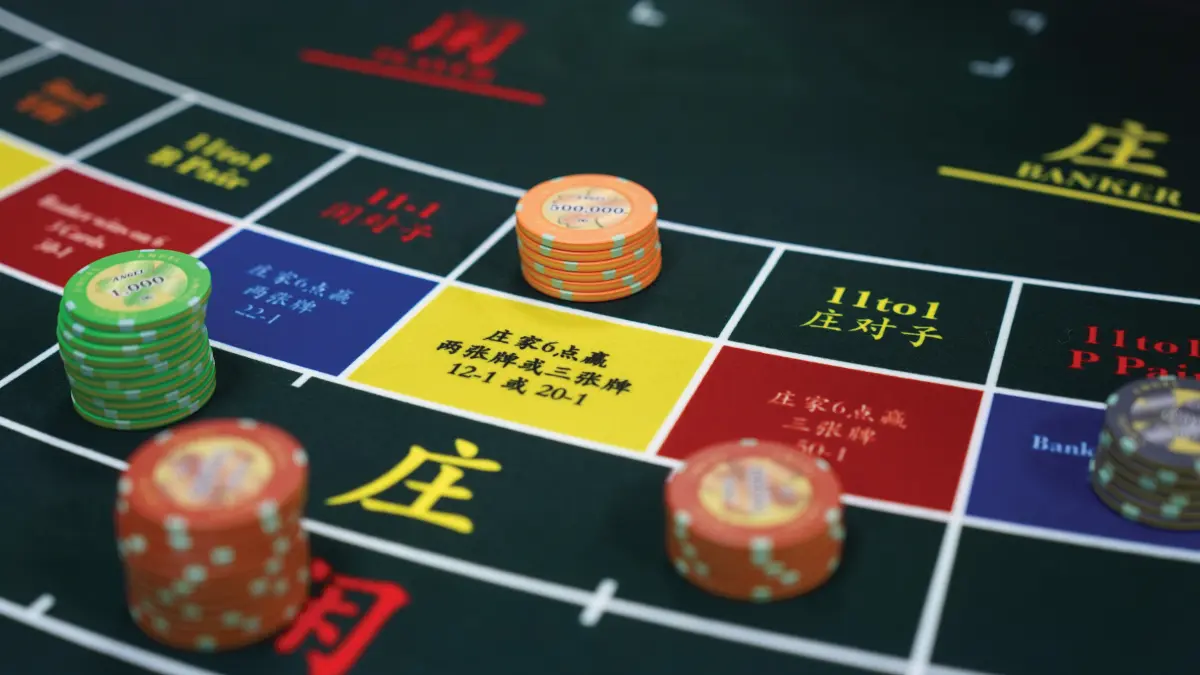
Walk past any high-limit room or log into a live-dealer stream in 2026, and you will see players staring intently at glowing grids of red and blue circles. Those digital scoreboards fuel some of the most persistent baccarat scorecard myths in modern gambling. Bettors jot down notes on paper cards, squint at derived roads, and wait patiently for a perceived trend to mature before placing a chip. Yet every single hand dealt from the shoe remains mathematically independent of the outcomes recorded on that screen.
Human brains are wired to hunt for order inside pure randomness. Sports fans reading post-match breakdowns on https://blog.betya.com/en/blog/michael-carrick-exit-every-man-utd-player-message-after-the-sack-from-bruno-fernandes-down/ often notice how hindsight turns isolated results into a dramatic narrative. Similarly, casino gamblers project meaning onto a column of five consecutive Banker wins. Cards have no memory. The shoe simply deals the next mathematical probability without caring what happened ten seconds ago.
Understanding why these visual charts mislead players requires looking closely at both psychology and probability. First, we will examine how the gambler’s fallacy distorts table decisions. Next, we will compare the exact mathematical house edges behind Banker, Player, and Tie wagers so you can approach the felt with realistic expectations.
Why Baccarat Scorecard Myths Fool Experienced Players
Even veterans fall for baccarat scorecard myths because streaks feel remarkably persuasive in real time. Imagine sitting at a Macau or Las Vegas table after Banker wins seven hands in a row. Half the table immediately stacks chips on Player because they believe the shoe must balance out soon. Meanwhile, the other half doubles down on Banker because they assume the shoe has entered a hot streak. Both camps react to identical data with opposite conclusions.
That first group is trapped by the classic gambler’s fallacy. In probability theory, this cognitive bias occurs when someone believes past independent events influence future outcomes. Flipping a fair coin onto heads six straight times does not make tails any more likely on the seventh toss. Seven Banker wins change nothing. Likewise, an eight-deck shoe does not nudge the eighth hand toward Player.
A shoe of 416 cards does not owe you a Player win just because Banker dominated the last ten minutes.
Conversely, players who chase streaks fall into the hot-hand fallacy. They treat a cluster of identical outcomes as evidence of a hidden mechanical pattern inside the shuffle. Modern continuous shuffling machines and pre-shuffled eight-deck shoes used across 2026 casinos eliminate predictable clumping. Consequently, riding a “dragon” tail on the scoreboard carries the exact same statistical expectation as betting against it.
How Digital Boards Reinforce Baccarat Scorecard Myths
Casinos know exactly why players love tracking trends, which explains why every modern table features an elaborate electronic display. These screens do not merely show basic winners and losers. Instead, software automatically generates five separate charts to keep bettors occupied between hands:
-
The Bead Plate records every coup sequentially from top to bottom in colored circles.
-
The Big Road tracks streaks of Banker and Player wins in alternating vertical columns.
-
The Big Eye Boy, Small Road, and Cockroach Pig compare column lengths to flag symmetry or choppiness.
Looking at five synchronized grids creates an optical illusion of scientific forecasting. Players begin talking about “ping-pong patterns” or “double jumpers” as though they were reading weather radar. Roadmaps merely repackage past randomness. Casinos display these boards prominently because confident pattern hunters wager more consistently and stay seated longer. Furthermore, believing in baccarat scorecard myths distracts bettors from the slow, steady grind of the house edge.

The Real Math Behind Banker, Player, and Tie Bets
Stripping away the glowing roadmaps leaves you with three core wagers governed by fixed drawing rules. Because neither the dealer nor the player makes discretionary card choices after betting closes, baccarat math is completely transparent. In a standard eight-deck shoe, every coup resolves according to strict third-card regulations. Therefore, we can measure the exact probability and house advantage of every primary option on the layout:
-
Banker Bet: Wins 45.86% of all hands, loses 44.62%, and ties 9.52% of the time. Even after paying the standard 5% winning commission, Banker carries a slim 1.06% house edge.
-
Player Bet: Wins 44.62% of all hands and pays even money with no commission. As a result, Player carries a slightly higher 1.24% house edge.
-
Tie Bet: Occurs roughly 9.52% of the time, or about once every 10.5 hands. At the traditional 8-to-1 payout, Tie saddles the bettor with a massive 14.36% house edge.
Some 2026 casino floors and online studios also offer alternative payout tables that shift these figures slightly. For example, tables paying 9-to-1 on a Tie reduce that wager’s house edge from 14.36% down to 4.84%. Similarly, No-Commission or EZ Baccarat variants remove the 5% Banker fee by pushing or paying half on specific winning totals like a three-card seven or a six. Even then, the Banker house edge sits between 1.02% and 1.46%, while red and blue scoreboard patterns still offer zero predictive leverage.
Skeptics occasionally argue that baccarat differs from roulette because cards are dealt without replacement until the cut card appears. Technically, removing cards from a 416-card shoe does alter remaining probabilities by microscopic fractions. However, professional computer simulations prove that card-removal effects shift the house edge by less than a few hundredths of a percent. Visual charts cannot detect those tiny shifts.
Practical Bankroll Habits That Replace Baccarat Scorecard Myths
Letting go of baccarat scorecard myths actually makes the game far more relaxing to play. Instead of sweating over whether a third column on the Small Road is about to break, you can focus on decisions that genuinely protect your bankroll. Use these practical habits during your next session:
-
Anchor your action on Banker or Player wagers, since both keep the house edge near one percent.
-
Avoid the Tie bet and high-variance side wagers like Dragon Bonus or Pair bets, where house edges regularly exceed ten percent.
-
Establish a firm stop-loss limit and a realistic win target before buying chips, then walk away when either threshold hits.
Treat the electronic scorecard as a fun historical scrapbook rather than a crystal ball. Watching a long streak unfold can certainly add excitement to a quiet evening at the tables. Nevertheless, disciplined players base their unit sizes on strict bankroll math instead of superstitious pattern hunting. Respect independent probability, ignore the ghosts in the grid, and enjoy a smarter, calmer session.